Colloquia
A Missing Gender Explanation? Implications of Women's Relationship Preferences for U.S. Marital Decline
Authorship: Hannah Tessler and Elizabeth A. Armstrong
Abstract: This study draws on an interview sample of 120 single heterosexual women aged 20-58 to explore women's desires for what we term the normative marriage and family package, defined as heterosexual and gender complementary pursuit of marriage and childrearing within a shared household. Almost three-quarters of the women interviewed expressed interest in the normative marriage and family package as young adults. By the time of the interview, however, a substantial fraction of the women no longer sought all aspects of this arrangement, with some seeking non-normative relationship configurations and others opting out of engagement with men entirely. Both positive experiences with singlehood and negative experiences with relationships motivated their changing preferences. Our results suggest that women use a distancing from normative aspirations as a strategy for managing the gendered risks of unequal heterosexual relationships. We conclude with potential implications for the future of marriage given the current trends of marriage and fertility decline.
Bio
(From https://sites.lsa.umich.edu/elizabetharmstrong/)
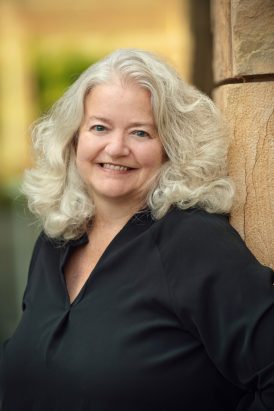 Elizabeth A. Armstrong is the Sherry B. Ortner Collegiate Professor of Sociology at the University of Michigan. Her research focuses on the reproduction and transformation of systems of social inequality in the United States. She is interested in gender, sexuality, social class, race, and other dimensions of inequality, and the ways in which they intersect. She approaches these questions as a cultural and organizational sociologist. Substantively, most of her work has focused on sexuality and/or higher education.
She joined the U-M faculty in 2009, returning to her undergraduate alma mater. She graduated from Michigan with a double major in sociology and computer science in 1988. She received her Ph.D. from the UC-Berkeley Department of Sociology and taught at Indiana University-Bloomington from 2000-09. She spent 2007-08 at the Radcliffe Institute for Advanced Study at Harvard University, and 2018-19 at the Center for Advanced Study in the Behavioral Sciences (CASBS) at Stanford University.